The mango that broke a market
It is peak mango season in India. The Alphonso harvest is at its richest, the Kesar at its most fragrant.
India has achieved record foodgrain production of 353.96 million tonnes, including 117.51 million tonnes of wheat and 149.07 million tonnes of rice as per the Third Advance Estimates for 2024-25.




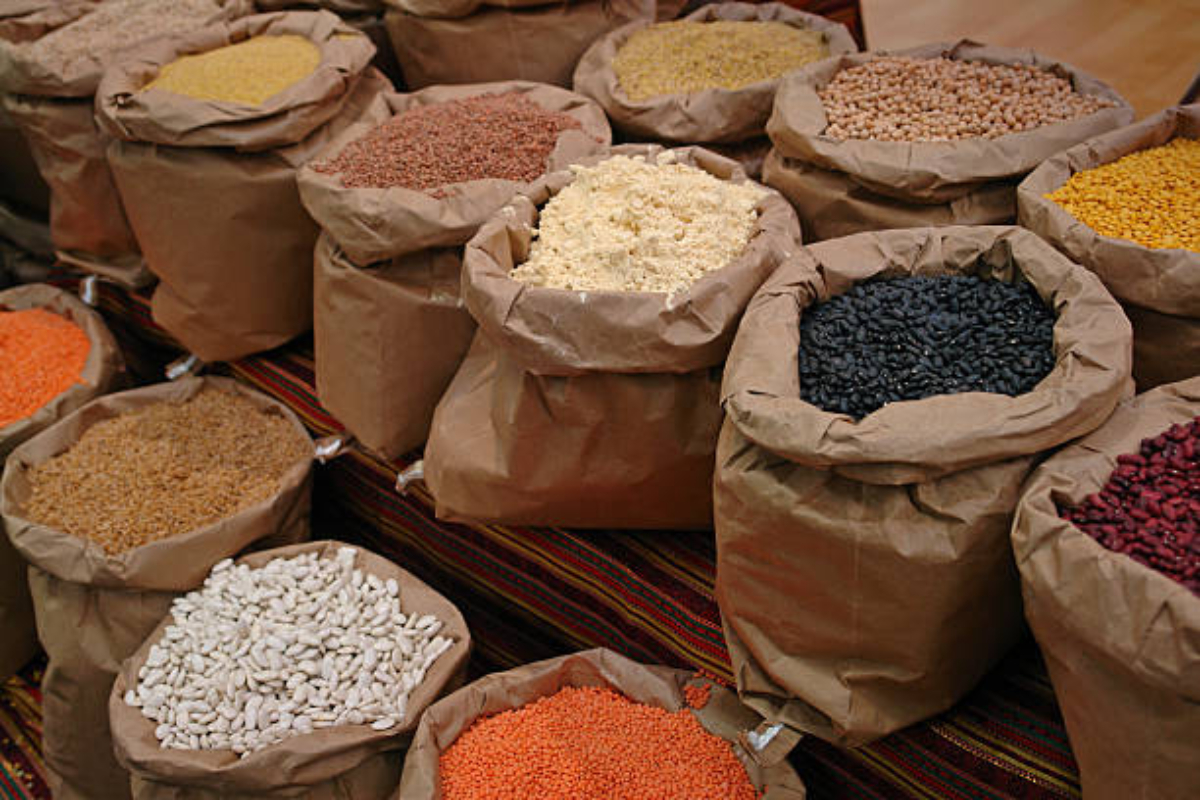
[Representational Photo]
India has achieved record foodgrain production of 353.96 million tonnes, including 117.51 million tonnes of wheat and 149.07 million tonnes of rice as per the Third Advance Estimates for 2024-25.
“For a growing nation like India, with rising demand for both raw and processed food, efficient storage is central to maintaining year-round availability of essential commodities. It helps secure buffer stocks, supports the Public Distribution System (PDS), and ensures that every grain harvested contributes to national nutrition and economic growth. In this way, robust storage infrastructure becomes a cornerstone of both agricultural prosperity and food security,” the government said.
Advertisement
The Food Corporation of India (FCI) is the primary agency responsible for centralised storage of food grains in India. Under the centralised procurement system, the procurement of food grains in Central Pool is undertaken either by FCI directly or by State Govt. Agencies (SGA).
Advertisement
The FCI and State agencies currently hold 917.83 lakh metric tonnes of covered and CAP storage capacity for Central pool grains, while there are 8,815 cold storages with 40.21 million metric tonnes capacity to preserve perishables nationwide.
Additionally, decentralised storage is also expanding with 5,937 new primary Agricultural Credit Societies (PACS) having been registered and 73,492 computerised as of June.
To further improve PACS functioning, the government has approved a project to computerise operational PACS with a financial outlay of Rs 2,516 crore, enhancing transparency, record-keeping, and efficiency, the government said.
Effective storage infrastructure is vital for managing India’s food supply chain, reducing wastage, and ensuring both farmer and consumer welfare. Proper storage, including cold storage and modern warehouses, significantly reduces the wastage of agricultural produce.
The help in maintaining a buffer stock of foodgrain, which is essential for national food security and for distribution under programmes like the National Food Security Act (NFSA). The buffer stock also helps to protect consumers from extreme price volatility in essential commodities, as the government can release foodgrain in the market to increase supply and bring down prices when required.
Government schemes like the Agriculture Infrastructure Fund (AIF), Agricultural Marketing Infrastructure (AMI), Pradhan Mantri Kisan SAMPADA Yojana (PMKSY), and World’s Largest Grain Storage Plan are strengthening storage, processing, and farmer income security.
The Agriculture Infrastructure Fund (AIF) was launched in 2020 to strengthen agricultural infrastructure across India. It is a medium-long-term debt financing facility through interest subvention and credit guarantee support on loans for investment in viable projects for post-harvest management infrastructure and viable farming assets.
The scheme focuses on the creation of farm-gate storage and logistics facilities to help farmers store their produce effectively and sell it at better prices by minimising post-harvest losses and reducing dependence on intermediaries.
Infrastructure such as warehouses, cold storage, sorting and grading units, and ripening chambers enhances farmers’ ability to access wider markets and improve value realisation, thereby boosting their income.
As of September, Rs 73,155 crore have been sanctioned for 1.27 lakh projects under AIF, including thousands of warehouses and cold stores. Project cost of these sanctioned projects is Rs 1.17 lakh crore.
Advertisement